What a signing page needs
Whatever software you use, a page the client can say yes on has five parts:
- The scope, line by line, so there is nothing to argue about later.
- The payment schedule: how much at signing, during the job and at the end.
- The contract terms, available but not burying the total.
- A date the price is good until. An open-ended price gets shopped around.
- A signature box that works with a finger. Most homeowners read the estimate on a phone.
Know when it was opened, not just sent
"Delivered" is not "read". What you want is the moment the client lands on the estimate itself, and how many times they come back. A client who opened it three times and has not signed is thinking. A short text that day works better than a call a week later.
How it works in WorkTime CRM
Open the estimate in Estimates and press Send. The email is already written, with the PDF and a "View & Sign" button. Edit it before it goes, or change the default once in Settings → Estimate Design. No email on file? The SMS tile next to Send texts the same link.
The client opens a branded page: the lines, the payment plan, your terms from Settings → Contract behind a "View contract" button, your job photos, and a countdown of how long the price is guaranteed (30 days by default, set in Settings → Estimate Design). They type their name, draw a signature with a finger and press "Sign & Approve".
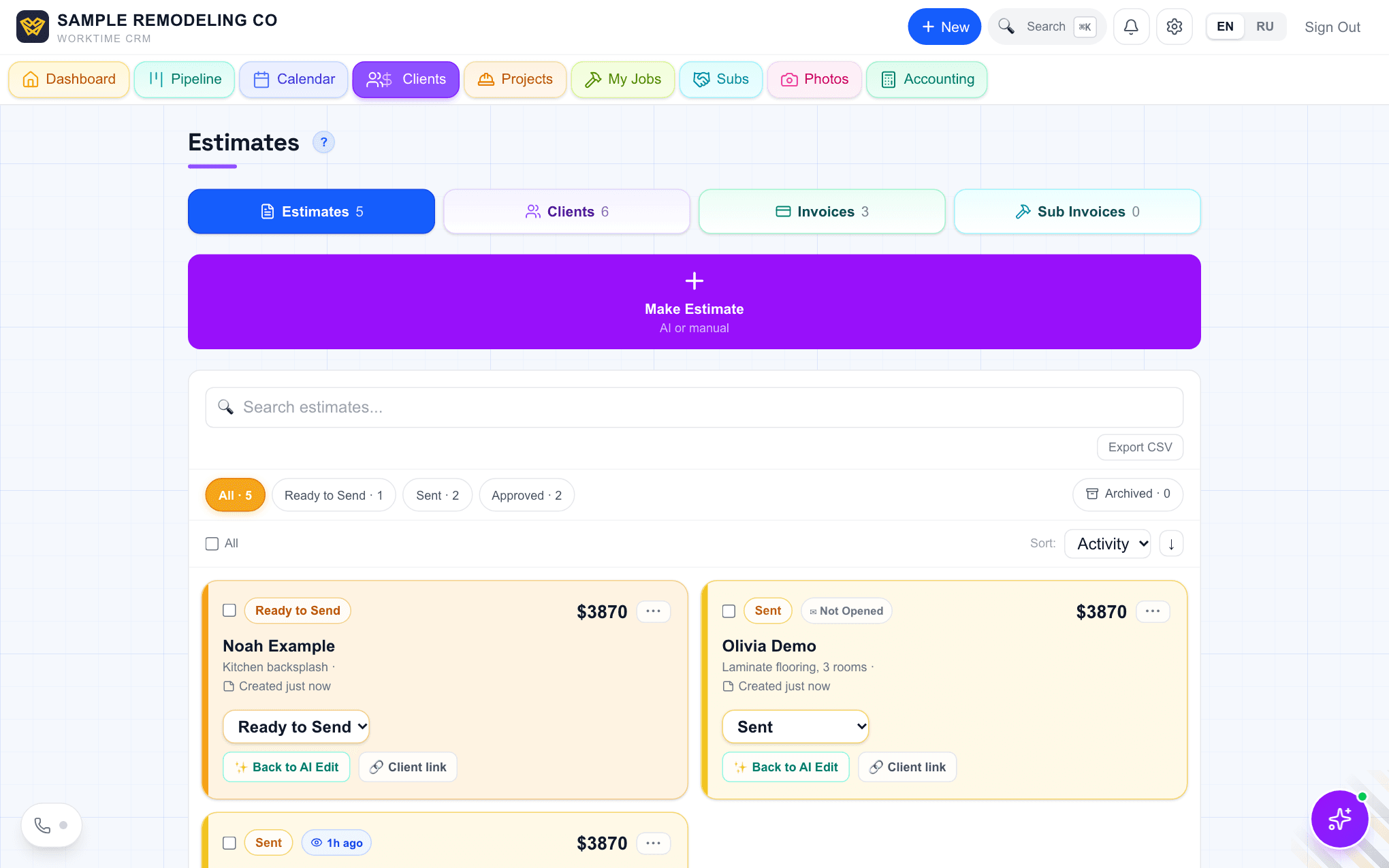
The card shows "Not opened yet", then "Opened" with the time and the count. Only real visits to the page count, never an email pixel. The estimate header shows Sent, Opened and Signed with the date. A client who opened and did not sign for two days gets a ⚡ mark on the Pipeline, so you know whom to text today.
On signing you get a Telegram or push alert, the project is created with its stages, and the invoices come out of the payment plan. The client sees the deposit invoice right away.